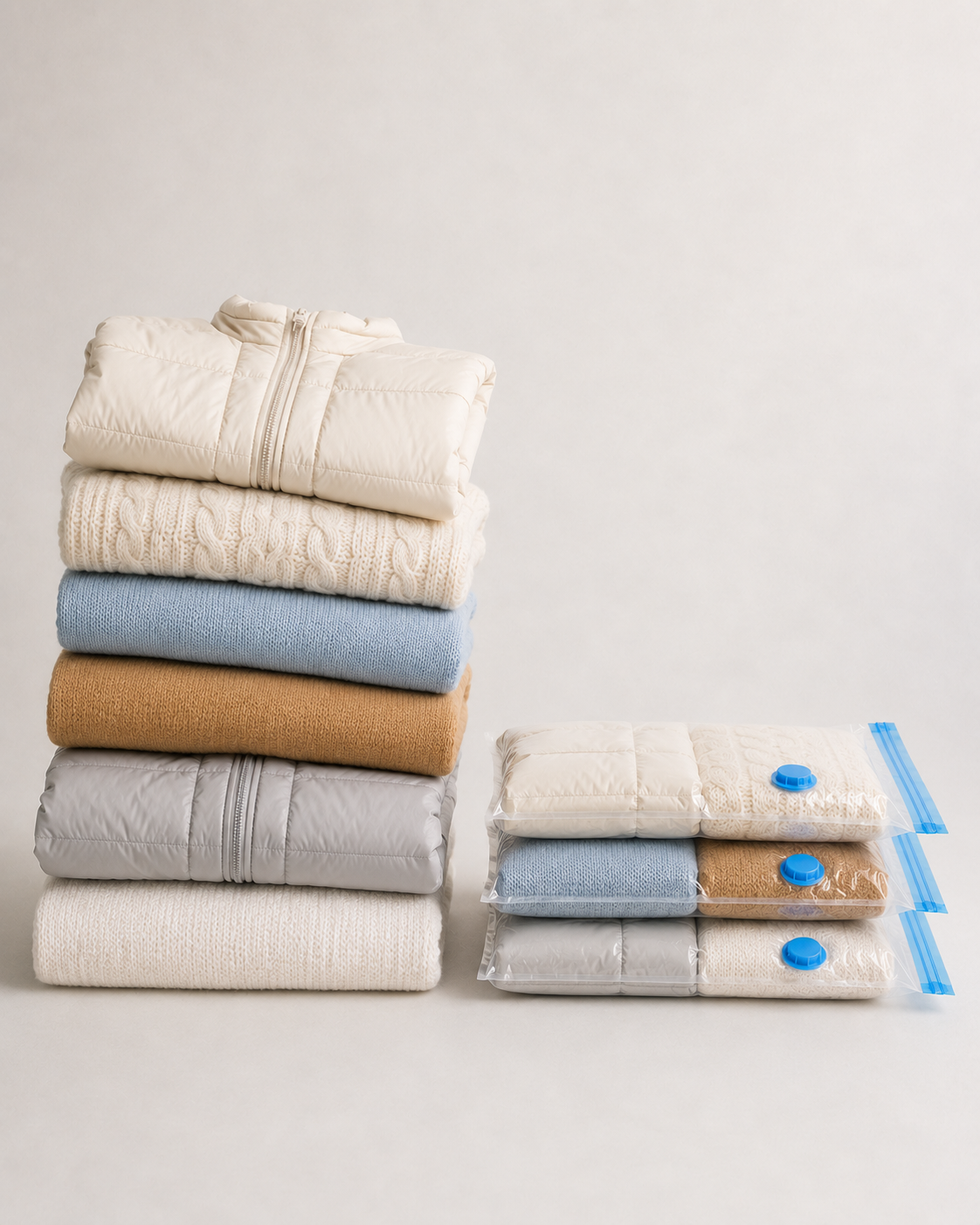
Vacuum compression bags can make a suitcase feel dramatically more organised, especially when the trip involves sweaters, jackets or other soft clothing that traps a lot of air. Their benefit is simple: they reduce the volume occupied by suitable items so the available space inside luggage can be used more efficiently.
What they do not do is equally important. Compression does not make clothing lighter. It does not remove the need to check airline baggage limits, and it does not mean every item should be compressed. Used well, compression is a space management tool rather than a shortcut for packing without limits.
What vacuum compression bags actually do
Soft textiles hold air between fibres, folds and layers. A vacuum compression bag allows some of that air to be removed while the bag keeps the contents in a flatter form. The clothing itself is still there, but the package becomes easier to place inside a suitcase, wardrobe or storage box.
The effect is usually most noticeable with thick sweaters, hoodies, casual jackets, trousers, blankets and similar soft items. Thin shirts already occupy relatively little volume, so the improvement can be smaller.
Compression changes volume, not weight
This is the most important rule to remember. If the clothing in a bag weighs three kilograms before compression, it still weighs about three kilograms afterwards. Removing air changes how much room the clothing uses. It does not remove the mass of the clothing itself.
That difference matters when flying. A more compact suitcase can tempt travellers to add more items, but the airline still measures the final weight. Use the recovered space for better organisation and flexibility rather than automatically filling every centimetre again.
When compression is most useful
Compression works best when the challenge is bulky soft clothing. Cold weather trips are an obvious example because knitwear, fleece and jackets can consume a large part of a suitcase even when only a few pieces are packed.
It can also help on longer trips, family travel and journeys where you need to separate clothing by person or category. At home, the same principle can make seasonal storage easier by turning soft, irregular piles into flatter packages. Read our guide to storing seasonal clothing more efficiently for that use case.
What should not be compressed
Compression bags are intended for suitable soft items. Sharp objects can damage the bag. Liquids can leak. Delicate clothing may react poorly to prolonged pressure or heavy creasing. Items with rigid decorative elements can also create pressure points against the material.
Always consider the care requirements of the garment first. Formal clothing, delicate fabrics and pieces that must retain a particular shape may be better packed conventionally.
Do compression bags cause wrinkles
They can. Pressure and tight folding may create more visible creases in some fabrics. The effect depends on the material, how the garment is folded and how long it remains compressed.
For casual clothing, this may not matter. For shirts, dresses or garments that crease easily, a gentler packing method can be preferable. A practical suitcase often combines methods rather than using compression for every item.
Why a portable pump changes the travel experience
Traditional vacuum storage bags often depend on a household vacuum cleaner. That works at home but becomes inconvenient when you need to repack in a hotel or apartment. A portable cordless pump removes that dependency.
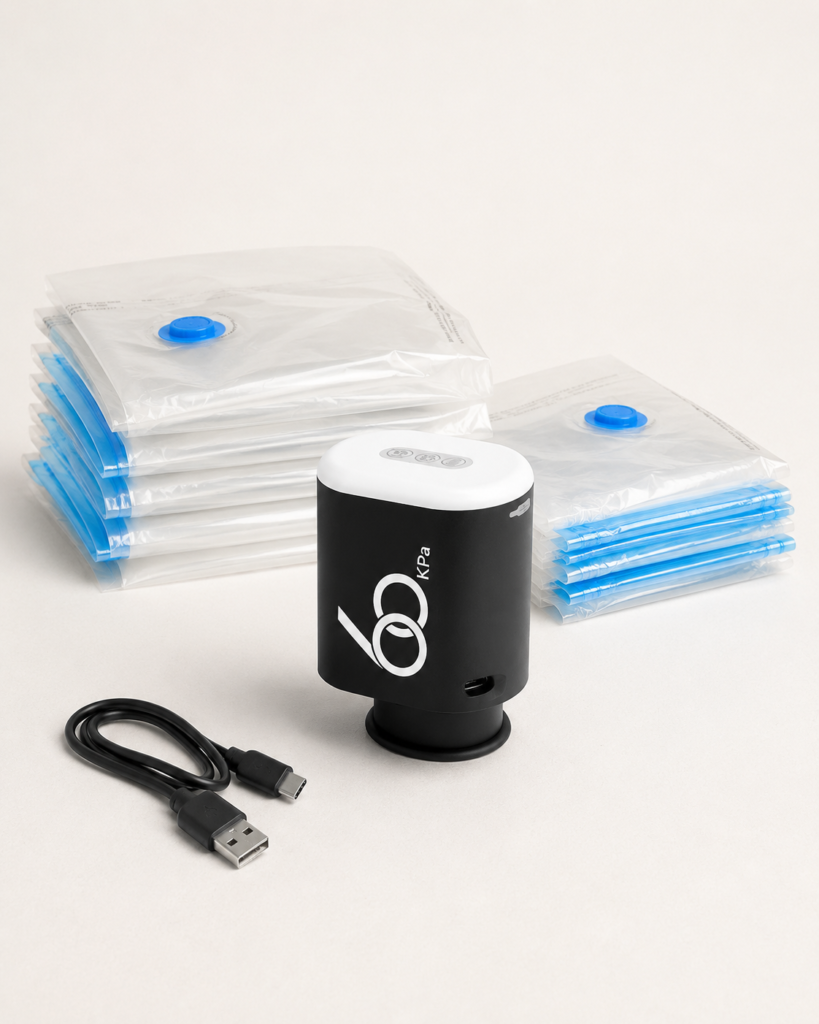
SmartPack Power is designed around that travel problem. The compact rechargeable pump is intended to remove air from compatible compression bags without requiring a full size vacuum. Manufacturer rated suction is up to 60 kPa. The value is not only compression at home, but the ability to repeat the process when the return journey begins.
Organisation matters as much as compression
One large bag filled with every piece of clothing may save space, but it can make unpacking frustrating. Smaller categories are often more useful. Tops can stay together. Trousers can occupy another bag. Heavier layers can remain separate until they are needed.
This approach is especially effective on multi stop trips because you can open one group without disturbing everything else. It also makes the return journey easier because worn and clean items can be kept apart.
How to get a better seal
A compression bag only works well when the seal and valve are used correctly. Avoid overfilling. Keep fabric away from the closure. Run your fingers along the seal to make sure it is completely closed before using the pump.
Check the valve area for lint or debris and stop the process if the bag shifts or the valve does not sit correctly. Good preparation usually matters more than trying to compress the bag as aggressively as possible.
The real advantage is more usable space
Vacuum compression bags are most useful when they solve a specific packing problem. They help control bulk, create flatter shapes and make clothing easier to group inside a suitcase. They do not change weight and they do not replace thoughtful packing.
For practical results, combine compression with sensible clothing choices and a clear packing system. If bulky garments are your main challenge, our guide to packing bulky clothes without wasting suitcase space is the best next read.