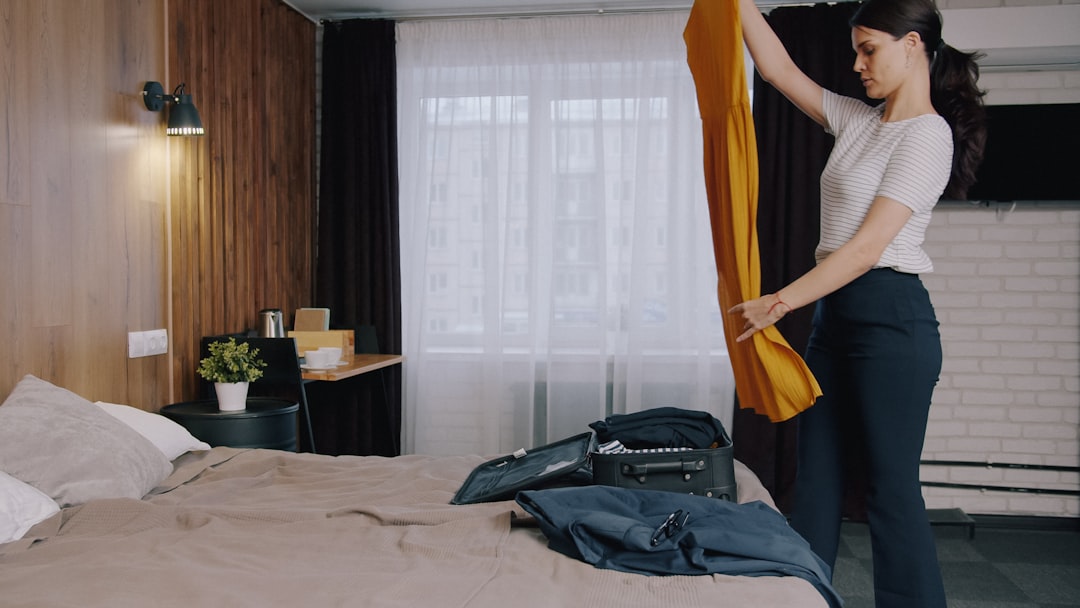
Packing for a full week with only a carry on can feel restrictive, but the challenge is usually not the size of the suitcase. The real challenge is deciding what deserves space. Once every item has a purpose, a compact bag can handle more than many travellers expect.
The goal is not to squeeze seven complete outfits into a small case. It is to create enough combinations, keep essentials accessible and leave some flexibility for the return journey.
Start with the itinerary
A city break, beach holiday and business trip all require different clothing. Before choosing garments, look at the weather, planned activities and any dress requirements. This prevents last minute additions that do not serve a clear purpose.
If most days involve casual walking and sightseeing, you may need only one more polished outfit for dinner. If the hotel has laundry facilities, the amount of basic clothing can be reduced further.
Choose a simple colour palette
A small wardrobe becomes much more useful when most pieces work together. Choose two or three main colours and build around them. Tops should work with more than one pair of trousers. A sweater should match several outfits rather than only one.
This approach creates variety without increasing the number of garments. It also reduces the temptation to pack backup clothing that never leaves the suitcase.
Wear the bulkiest pieces during travel
Jackets, heavy sweaters and larger shoes can consume a significant part of a carry on. When practical, wear the bulkiest layer and the largest pair of shoes on the travel day. A jacket can be removed once you are seated, but it does not need to occupy valuable luggage space.
This is especially useful when the destination requires warmer clothing. One substantial outer layer can often replace several smaller pieces.
Pack clothing for combinations
For many seven day trips, a few well chosen tops, two or three bottoms and one versatile layer can create enough combinations. The exact number depends on climate and activity, but the principle is more important than the formula.
Think about how often each piece can realistically be worn. If an item works with only one outfit or requires special care during the trip, it may not be the best use of limited carry on space.
Compress bulky soft clothing selectively
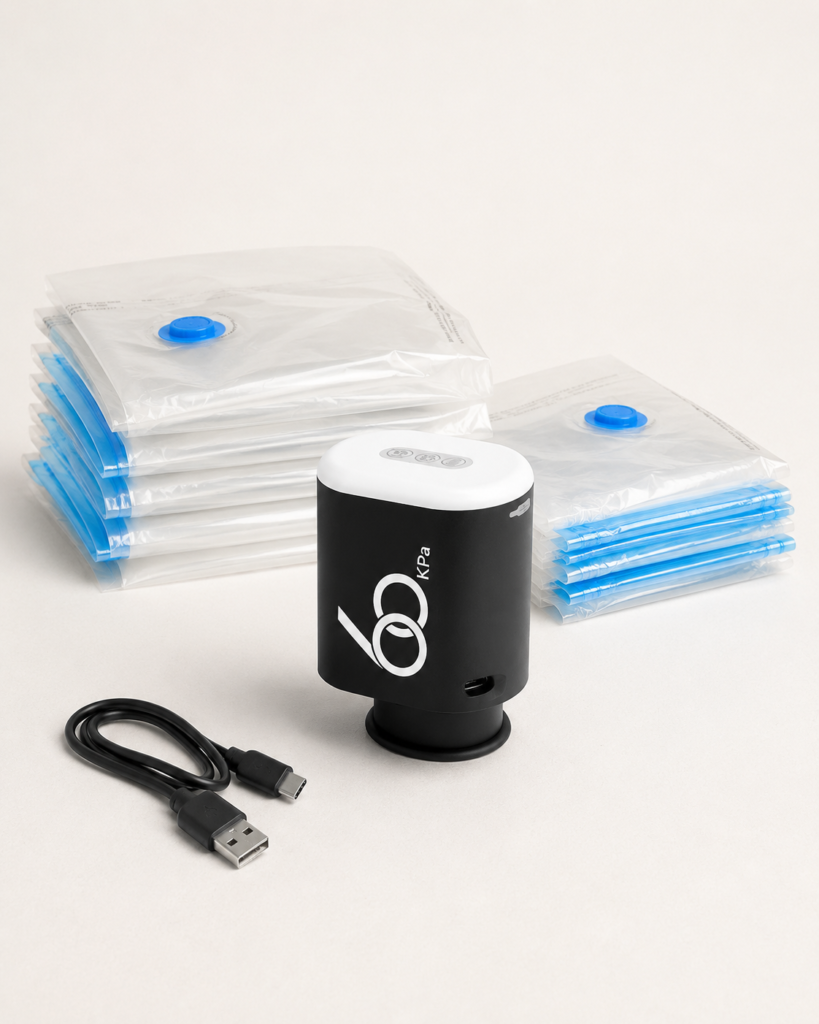
If sweaters, hoodies or other bulky soft garments are necessary, compression can help create more usable room. Suitable clothing can be placed inside a compatible reusable bag and compressed into a flatter shape.
A cordless system such as SmartPack Power is useful because the process can be repeated away from home. Manufacturer rated suction is up to 60 kPa. Remember that compression reduces volume, not weight, so the final carry on should still be checked against airline rules.
Use the smallest spaces intentionally
Shoes contain usable space. Clean socks or other small soft items can fit inside them. Charging cables can stay together in one compact pouch rather than being scattered through different pockets. Small decisions like these prevent wasted gaps.
Keep toiletries together and follow the liquid rules that apply to your airport and airline. Solid versions of some personal care products may also reduce the amount of liquid you need to carry.
Protect an easy access zone
Your passport, wallet, phone, medication and essential charging cable should never be buried beneath compressed clothing. Create one accessible area for the things you may need during the journey.
If the carry on will remain with you during a long flight, include one small comfort layer and anything needed for the first few hours after arrival. The suitcase should support the journey, not only the hotel stay.
Plan for one laundry moment
One laundry session can change the entire packing equation. If you know you can wash basics halfway through the trip, there is little reason to carry a fresh set for every day.
This is especially helpful for underwear, socks, exercise clothing and lightweight tops. A smaller clothing rotation creates more room for items that cannot be replaced or washed easily.
Leave space for the return journey
A carry on packed to absolute capacity on the first day is difficult to manage later. Clothing may not fold as neatly after use, and even a small purchase can create a space problem. Leave a little flexibility from the beginning.
If bulky clothing is the main challenge, read our guide to packing bulky clothes without wasting suitcase space. If you are travelling for more than a week, our packing system for longer trips provides a more detailed structure.
A carry on can be enough
Seven days of travel do not automatically require a large suitcase. A carefully chosen wardrobe, predictable organisation and selective compression can make a compact case work surprisingly well.
The best result is not the suitcase containing the most items. It is the suitcase that closes easily, stays organised and gives you everything you need without making the trip feel heavier than it should. For the same space-saving approach at home, see our guide to storing seasonal clothing more efficiently.
Photo by Vitaly Gariev via Unsplash.