Packing for a longer trip is not simply a larger version of packing for a weekend. Once the journey extends beyond a few days, clothing, toiletries, electronics and daily essentials begin to compete for space. Without a clear system, even a large suitcase can become difficult to manage after the first few nights.
The goal is not to create a perfect suitcase. It is to build a repeatable routine that makes departure, daily use and the return journey easier. Good organisation should reduce unnecessary decisions every time you open the case.
Plan around activities instead of individual days
Packing one complete outfit for every day often leads to duplication. A better approach is to think about the types of situations you expect. You may need comfortable clothing for daytime, something more polished for dinner, exercise clothes and one warmer layer for changing weather.
Choose pieces that work across several situations. A neutral pair of trousers can be worn with different tops. One versatile sweater can replace several similar layers. This approach reduces the total number of garments without making the trip feel restrictive.
Create clear clothing groups
Longer trips become much easier when every category has a defined place. Keep tops together, trousers together and smaller essentials in their own section. This makes it possible to find one item without moving everything else.
If two people share a suitcase, separate their clothing from the beginning. If the journey includes several climates, divide warm layers from lighter clothing. The system should reflect how the trip will actually unfold.
Use compression where bulk is the problem
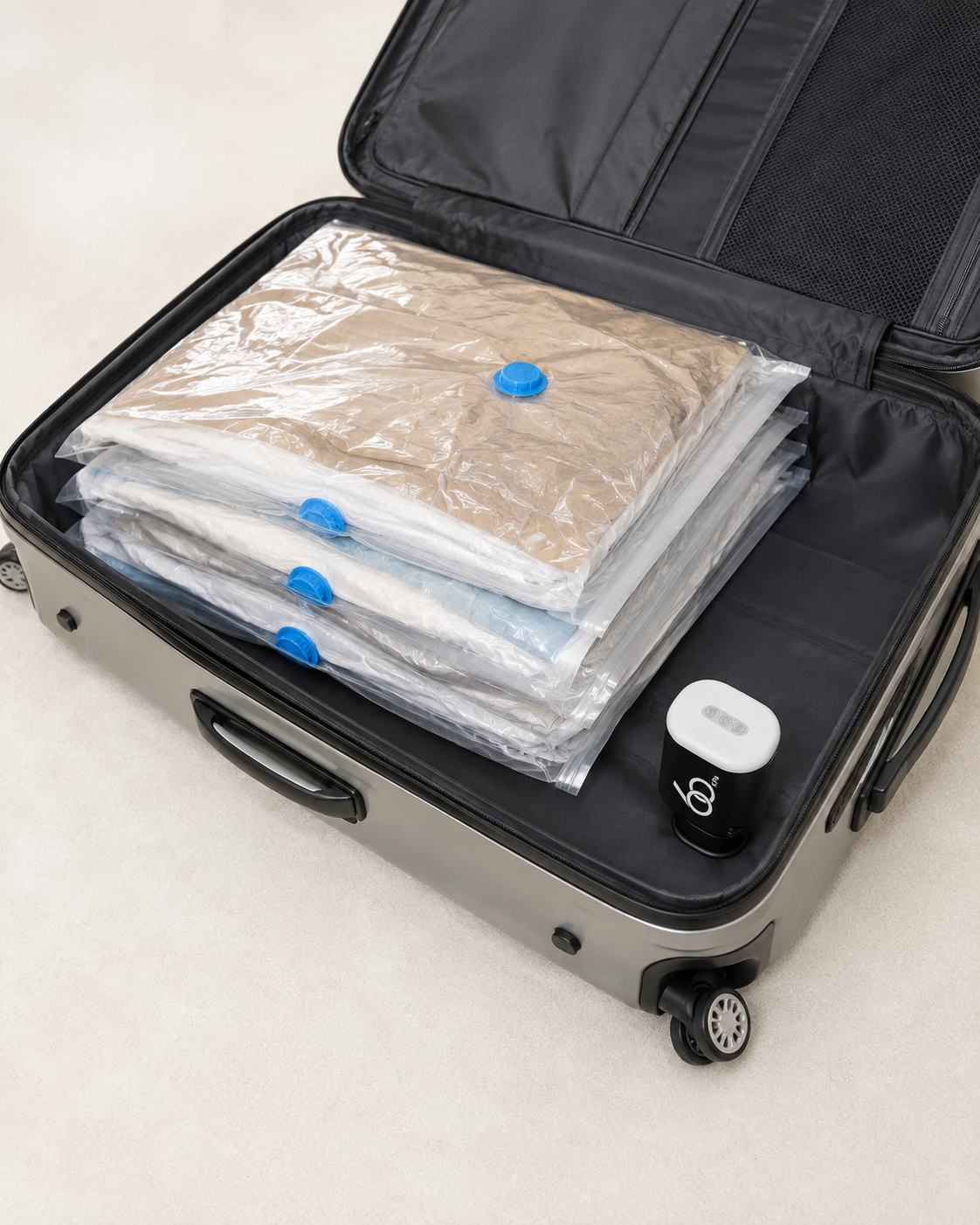
Not all clothing deserves the same treatment. Thin shirts may already pack efficiently, while sweaters and jackets can consume a large amount of volume because of trapped air. Compression is most useful for those soft, bulky items.
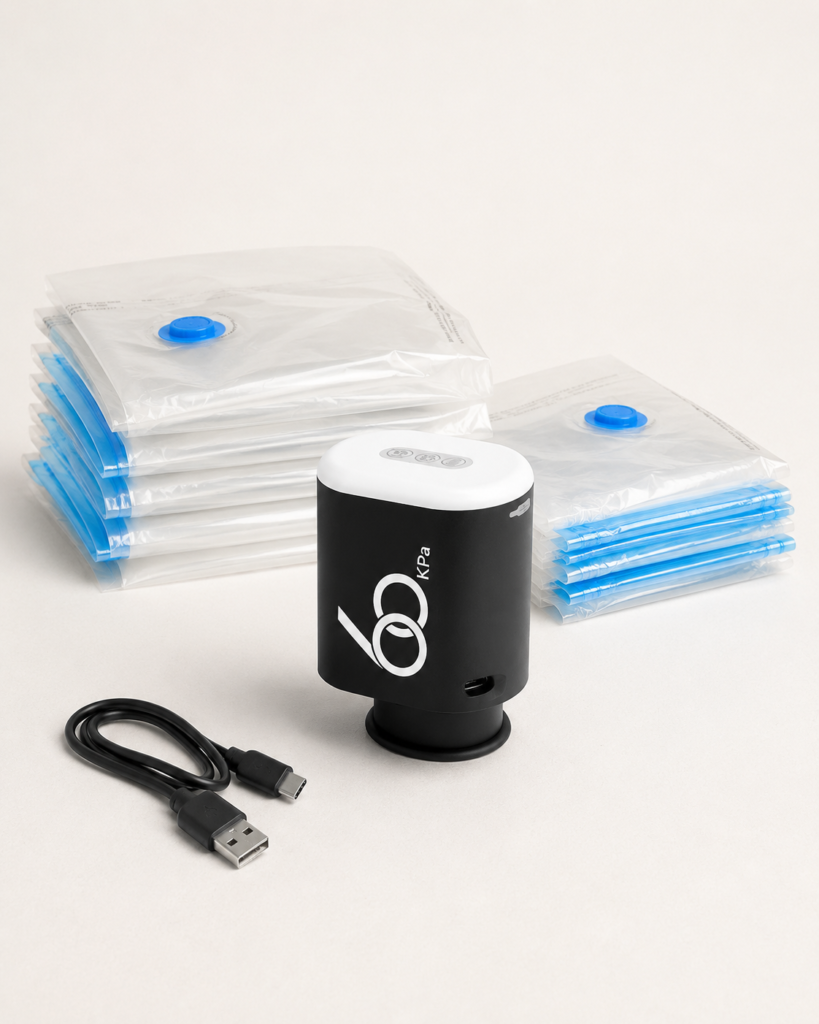
A cordless system such as SmartPack Power allows suitable clothing to be compressed at home and again during the trip. This is useful when a household vacuum is not available. Compression reduces volume, not weight, so the final suitcase should still be checked against airline limits.
Create an arrival layer
After a long flight or drive, you should not need to unpack the entire suitcase to find a clean shirt. Keep a small group of immediate essentials near the top or in an accessible compartment. This can include sleepwear, underwear, a fresh top and basic toiletries.
The same principle works for overnight stops during a road trip. A well placed arrival layer can keep the main suitcase closed until you reach the final destination.
Use the suitcase as temporary storage
On a longer trip, it is not always practical to unpack everything into hotel drawers. A well organised suitcase can function as temporary storage. Separate groups allow you to remove only the clothing you need while the rest remains protected and contained.
This is particularly useful when changing hotels or visiting several cities. A suitcase that can be closed quickly reduces the risk of leaving items behind and makes each transfer less stressful.
Plan for laundry before you leave
Laundry access can change how much clothing you need. If the hotel, apartment or destination has a washing machine, you may be able to pack fewer basics and reuse them during the trip. Even one planned laundry day can significantly reduce the number of tops, socks and underwear required.
Keep used clothing separate from clean items. A dedicated bag or section makes the suitcase easier to manage and prevents the return journey from becoming a mixture of everything you packed.
Protect the items you need every day
Medication, passports, charging cables, glasses and other daily essentials should have fixed locations. The longer the trip, the more valuable this habit becomes. Small items are easy to misplace when they move between pockets, hotel tables and suitcase compartments.
Create one place for travel documents and one place for electronics. The objective is to make important items predictable. You should know where they are without searching.
Leave capacity for the return journey
A suitcase rarely returns home exactly as it left. Clothing may not fold as neatly. Shopping and souvenirs can add unexpected volume. Leaving some unused space at departure gives you flexibility later.
If your trip includes bulky clothing, read our guide to packing bulky clothes without wasting suitcase space. It explains how selective compression can create room without encouraging overpacking.
Build a system you can repeat
The best packing method is one you can use again without starting from zero. Plan by activity, group similar items, compress only where it helps, keep arrival essentials accessible and give important objects permanent locations.
Longer trips feel easier when the suitcase supports the journey instead of becoming another problem to manage. The purpose of organisation is simple: fewer searches, faster repacking and more confidence that everything has a place.